
Huahao New Materials
Professional manufacturer and developer of electrical insulants
Professional manufacturer and developer of electrical insulants

Specialized instruments used for measuring, collecting, and analyzing the physical parameters of objects, their core function is to achieve real-time monitoring and quantitative analysis of multi-dimensional physical quantities such as temperature, pressure, displacement, vibration, sound waves, and electromagnetic fields through high-precision sensors and intelligent algorithms.
Specialized instruments used for measuring, collecting, and analyzing the physical parameters of objects, their core function is to achieve real-time monitoring and quantitative analysis of multi-dimensional physical quantities such as temperature, pressure, displacement, vibration, sound waves, and electromagnetic fields through high-precision sensors and intelligent algorithms. The equipment typically adopts a modular design, with the sensor part optimized for different measurement scenarios. For example, thermocouple sensors can cover a wide temperature range from -200℃ to 1800℃, piezoelectric pressure sensors have an accuracy of 0.05% FS (full scale), and laser displacement sensors can achieve nanometer-level resolution, ensuring the accuracy and stability of data collection.
In the data transmission and processing stage, high-speed ADC (Analog-to-Digital Converter) and FPGA (Field-Programmable Gate Array) chips are integrated, supporting millisecond-level response speeds to capture the changing trends of dynamic physical processes in real-time. The equipment is equipped with an embedded operating system, incorporating data filtering, feature extraction, and anomaly diagnosis algorithms to automatically eliminate environmental interferences (such as electromagnetic noise and mechanical vibrations) and output calibrated standardized data. Some models also support multi-channel synchronous acquisition and edge computing functions, enabling preliminary data analysis to be completed locally and only uploading key results, significantly reducing data transmission bandwidth requirements.
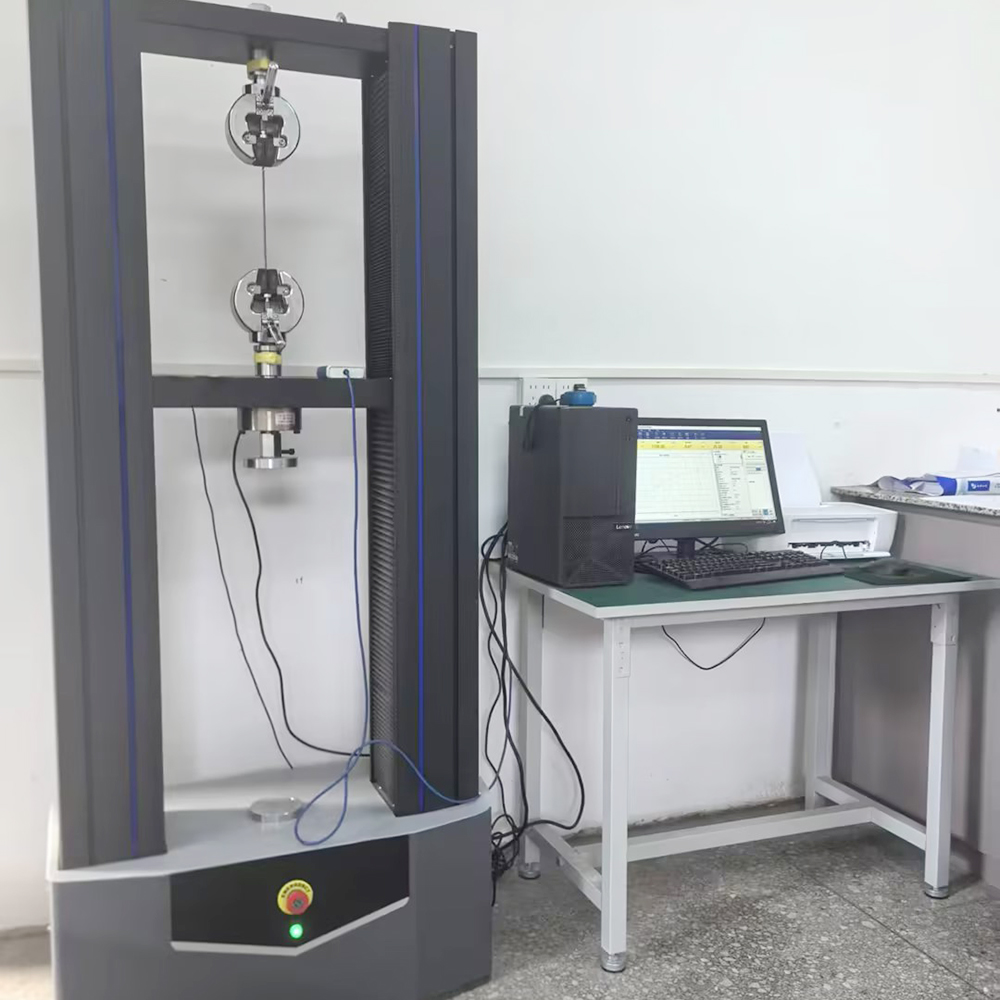
In terms of application scenarios, physical data detection equipment is widely used in industrial manufacturing, scientific research experiments, and quality control. For instance, in semiconductor production lines, the equipment can monitor temperature gradients and stress distributions during wafer processing, preventing yield reductions caused by thermal deformation. In bridge health monitoring systems, by continuously tracking structural vibration frequencies and displacement data, it can provide early warnings of potential structural fatigue risks. In the aerospace field, the equipment must meet the requirements for adaptability to harsh environments, operating stably within a temperature range of -55℃ to 125℃ and featuring radiation-hardened designs to ensure the continuity of data collection.
The equipment's operating interface typically employs a touch screen or upper computer software, supporting multi-language switching and custom report generation. Users can set parameters such as sampling frequency, alarm thresholds, and data storage periods according to their needs. Some models are also compatible with IoT protocols, enabling seamless integration with cloud platforms for remote monitoring and historical data tracing. Through regular calibration and self-diagnosis functions, the equipment can maintain measurement accuracy over the long term, reducing maintenance costs and becoming an indispensable basic tool in the construction of Industry 4.0 and smart laboratories.


