
Huahao New Materials
Professional manufacturer and developer of electrical insulants
Professional manufacturer and developer of electrical insulants

Centered on reverse osmosis (RO) technology, integrated with multi-stage pretreatment and back-end deep purification processes, ensures high-precision water quality purification.
Centered around reverse osmosis (RO) technology and integrating multi-stage pretreatment with post-end deep purification processes, this equipment achieves high-precision water purification. The core component, the RO membrane, has a pore size of merely 0.0001 microns, efficiently intercepting dissolved salts, heavy metal ions, bacteria, viruses, and organic pollutants in water, with a desalination rate exceeding 99%. Typically, the equipment is equipped with multi-media filters, activated carbon adsorption units, and softening systems as pretreatment modules, effectively removing suspended solids, residual chlorine, hardness ions, and colloidal impurities from the raw water, protecting the RO membrane from contamination and clogging, and extending its service life.
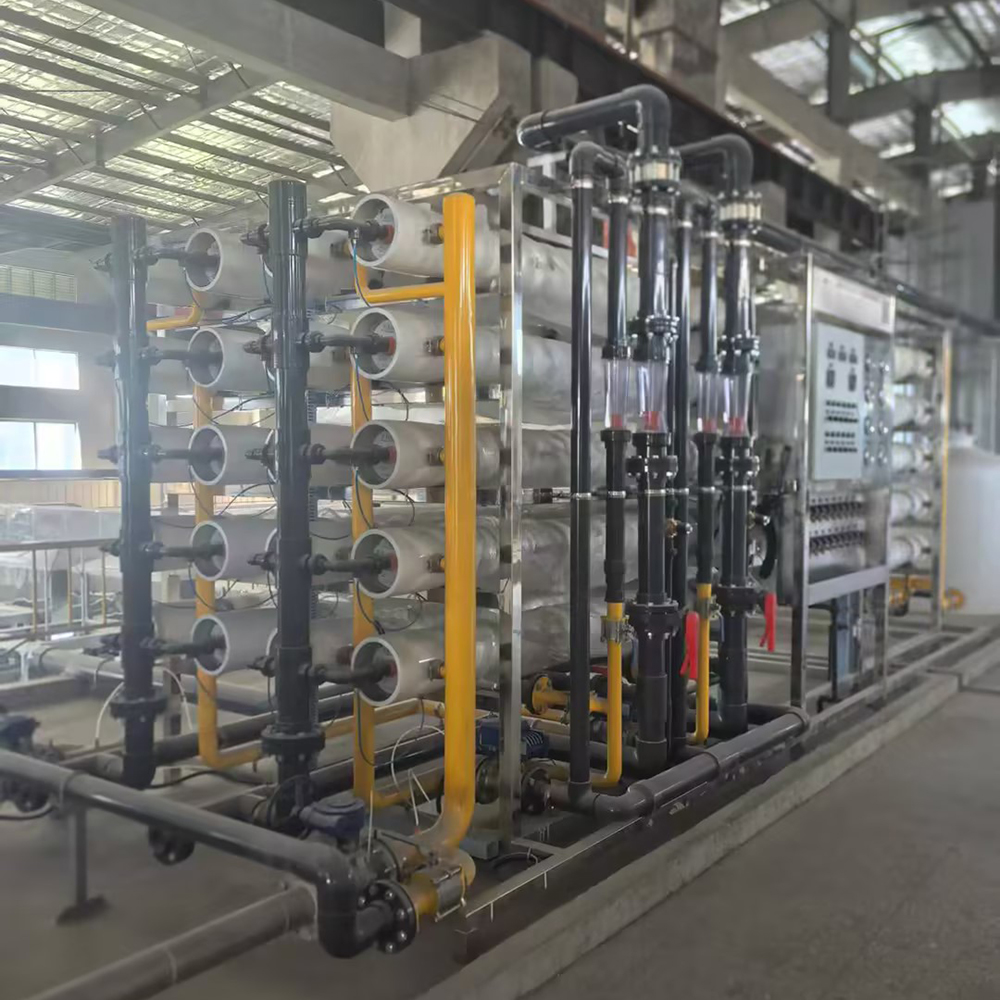
In the post-end treatment stage, EDI (Electrodeionization) technology or nuclear-grade mixed-bed resins are employed to further remove residual ions, ensuring that the electrical resistivity of the produced water consistently reaches 18.25 MΩ·cm (at 25℃), meeting the stringent water requirements in fields such as semiconductors, biopharmaceuticals, and laboratory analysis. The equipment operates with an intelligent control system, supporting functions such as automatic water production, shutdown, flushing, and water quality monitoring. It is equipped with an online resistivity meter and a TOC (Total Organic Carbon) detection module, displaying key parameters in real-time to ensure full water quality control throughout the process.
Additionally, the equipment features mechanisms for water shortage protection, high-pressure protection, and electrical leakage protection, ensuring safe and reliable operation. Its modular design allows for capacity expansion on demand, adapting to application scenarios of different scales. By optimizing the arrangement of RO membranes and flushing strategies, the water recovery rate can exceed 70%, reducing energy consumption by over 80% compared to traditional distillation processes, offering both environmental and economic benefits. This equipment has become an indispensable basic supporting device in fields such as electronic chip manufacturing, gene sequencing, and nanomaterial synthesis.


